
If it has an API, Sentra 311 can connect to it.
A two-way connection to any system with a REST/JSON API: work orders, asset management, permitting, a county system. Point Sentra 311 at it, draw the field map, test, and turn it on.
What it does
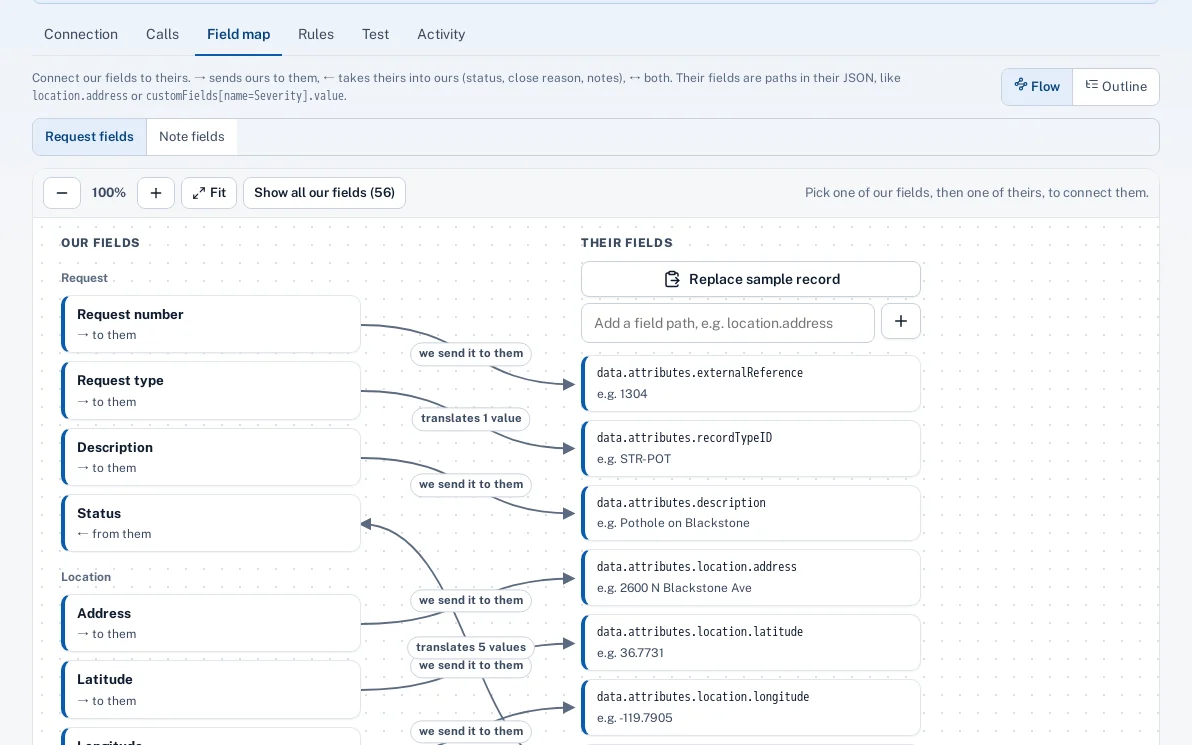
Admin › Integrations connects Sentra 311 to any system with a REST/JSON API. Enter its address and how Sentra 311 signs in, check the calls for creating, reading and updating a record, and draw the field map: our fields on the left, theirs on the right, with the direction of each line and value maps for things like statuses and types.
Each connection chooses what flows each way. To them: new requests, status changes, assignments and notes. From them: status, notes and closures, by polling on a schedule (every few minutes up to once a day) or through a signed webhook they call. Their new cases can optionally become requests here, routed like any other.
Every city runs systems no 311 vendor has a connector for.
How it works
- IT
Point it at their API
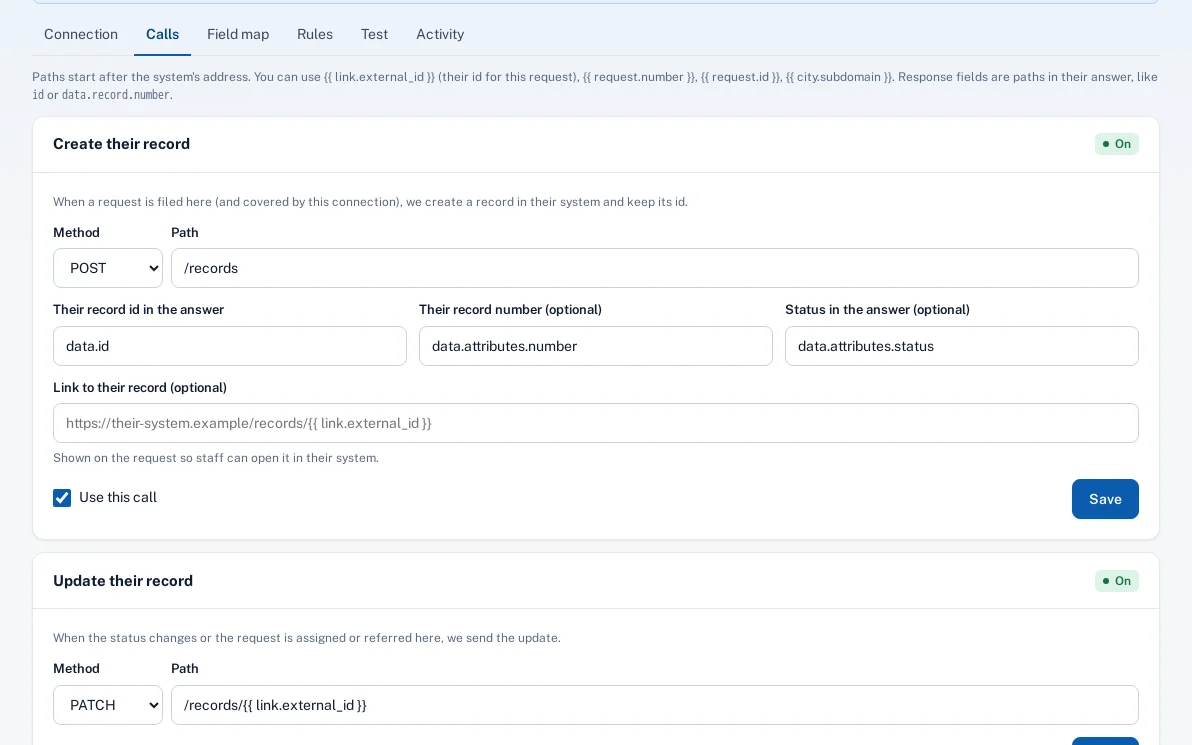
Address, sign-in and the calls to create, read and update a record.
- Admin
Draw the field map
Our fields to theirs, with values translated.
- Admin
Test with real records
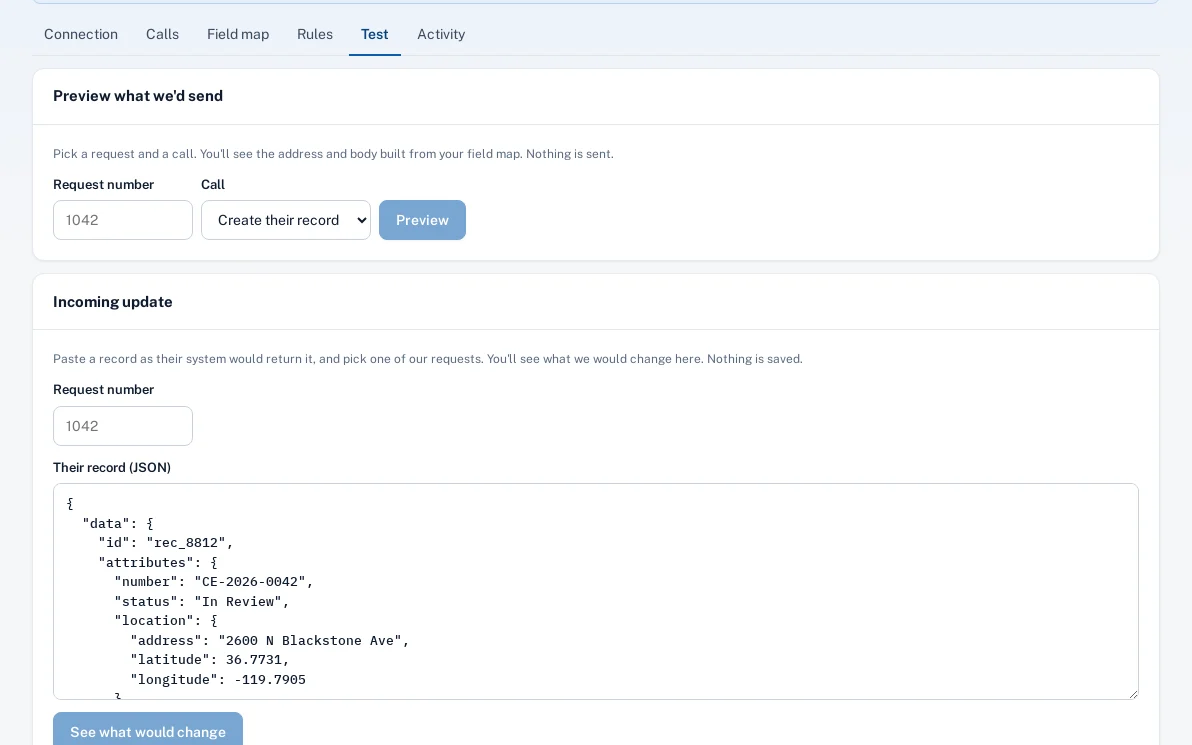
See exactly what would be sent and what would change. Nothing is written.
Nothing is written during a test
- Admin
Turn it on
Only after a passing test. Every call is logged.
Key features
Every common sign-in
API key in a header or query, bearer token, Basic, or OAuth2 client credentials.
Calls you can read
Paths like /records/{{ link.external_id }}, and where their answer keeps the id, number and status.
Visual field map
Click ours, click theirs, choose the direction.
Polling or webhooks
Check on a schedule, or receive their webhook, signed with HMAC SHA-256, a shared header or Basic.
Test without writing
See exactly what would be sent for a request, and what one of their records would change here.
Activity and retries
Every call logged with keys and personal data hidden; failures retried with backoff and shown on the request.
A day with it
IT enters the work order system’s API address and key and presses Test connection.
- On the field map, our request type maps to their work type, our address and location to theirs, and their status to ours.
- A test on a real request shows the exact JSON that would be sent.
- Once it passes, an admin turns it on for streetlight and sign requests only.
In practice
- Work orders. New streetlight requests become work orders, and their completion closes the request.
- A county system. Requests on county roads are created in the county’s system and tracked here.
- Their new cases. Cases opened in their system are filed here and routed like any other request.
When their system is down
Sentra 311 keeps working. Sends are retried with longer and longer waits, and anything still not sent is flagged on the request and on the Integrations page.
Loops and duplicates
Changes that came from their system are never sent back to it, repeat changes collapse into one send, and inbound notes and webhooks are de-duplicated.
Accessibility, security and privacy
Calls only go to the address the city entered, over https, and Sentra 311 checks it on every call. Resident names, emails and phone numbers are never sent unless the city turns that on, and that choice is in the audit log.
Who uses it
City IT
Connect systems on the city’s schedule.
City admins
Change the mapping without code.
Department system owners
Get cases in the system they already use.
Questions cities ask
How is this different from webhooks?
Webhooks tell your system something happened, and your IT team writes the code that acts on it. An integration does the work itself: it creates their record, keeps their id and takes their status back, with no code on your side.
What about XML or SOAP systems?
The connector speaks REST with JSON. For other systems, webhooks and our REST API remain available to IT.